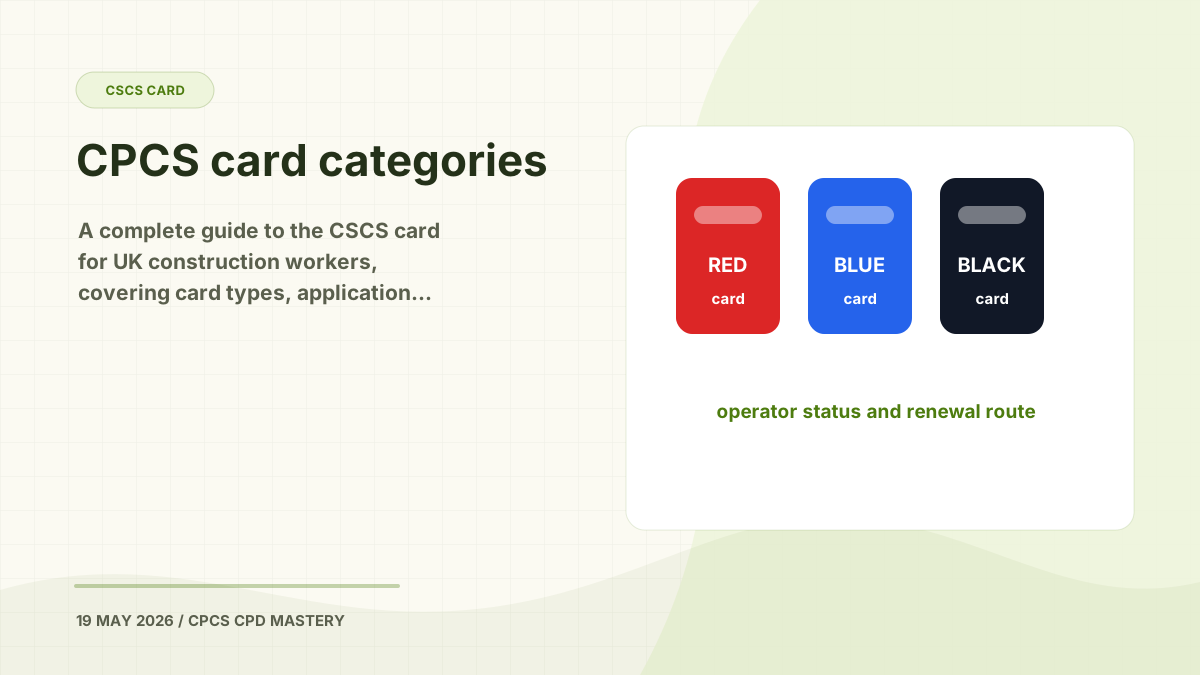
Ultimate Guide to the CSCS Card in the UK
If you are stepping into the UK construction industry, one of the very first things you will hear about is the CSCS card. It is the standard credential that proves you have the skills, training, and safety awareness to work on site. This guide breaks down what the CSCS card is, the different colours and what they mean, how to apply, and how it sits alongside your CPCS plant certifications.
What Is a CSCS Card?
CSCS stands for the Construction Skills Certification Scheme. It is a valuable certification that demonstrates an individual’s competence and qualifications within the construction industry. Carrying a valid CSCS card tells site managers and main contractors that you have the right qualifications for your trade and that you have passed the CITB Health, Safety and Environment Test.
“The CSCS card is a valuable certification that demonstrates an individual’s competence and qualifications within the construction industry.”
While the scheme is not legally mandatory across every site in the UK, in practice the vast majority of principal contractors and clients insist on it. No card, no access — it really is that straightforward on most modern projects.
The Different Types of CSCS Cards
CSCS cards come in different colours, and each colour represents a different role or level of experience. The most common cards you will encounter on site include:
- Green CSCS Card — The entry-level card designed for construction site operatives and labourers. It confirms basic site safety knowledge and a recognised labourer qualification.
- Blue CSCS Card — This card is for skilled workers, including carpenters, bricklayers, and electricians. It is also the card most qualified plant operators hold once they have completed a relevant NVQ Level 2.
- Gold CSCS Card — The gold card is for supervisors and advanced craft workers who have achieved higher qualifications and experience, typically at NVQ Level 3 or above.
- Black CSCS Card — The senior manager card, also awarded to individuals who have completed a construction-related NVQ Level 6 or higher, including those with relevant master’s or PhD-level qualifications.
There are additional cards for apprentices, trainees, professionally qualified people, and visitors, but the four above are the ones you will see day in, day out on a typical site.
How a CSCS Card Fits Alongside CPCS
If you operate plant, your CSCS card alone is not enough. You also need a CPCS card for each plant category you work in — whether that is a 360 excavator, a forward tipping dumper, a slinger signaller ticket, or anything else. The CSCS card proves your general site competence; the CPCS card proves you are trained and tested on the specific machine in your cab.
For a fuller breakdown of how the CPCS colours work and what they mean for your career, our guide on CPCS card categories explained is a good companion read.
How to Get a CSCS Card
The application process is relatively straightforward, but it does need to be tackled in the right order.
1. Qualifications and Training
First, you need to ensure that you have the necessary qualifications and training for the role you are applying for. This may include:
- Completing a relevant NVQ or SVQ
- Finishing an approved apprenticeship
- Holding a recognised vocational qualification for your trade
- Plant-specific training such as a CPCS course for operators
Without the right underpinning qualification, the CSCS scheme will not be able to issue you anything above a temporary or visitor card.
2. Pass the Health, Safety and Environment Test
Next, you will need to pass the CITB Health, Safety and Environment Test. The test assesses your knowledge of health and safety regulations within the construction industry. Expect questions covering:
- The Health and Safety at Work Act 1974 (HASAWA)
- General site safety and personal protective equipment
- LOLER and PUWER where relevant to lifting and work equipment
- The CDM Regulations and the responsibilities of duty holders
- Hazards such as working at height, noise, vibration, and COSHH
There are different versions of the test depending on your role — operatives, specialists, and managers each sit a tailored version.
3. Submit Your Application
Once you have passed the test, you can apply for the CSCS card itself. The application process typically involves submitting your qualifications, test results, and any other relevant documentation. Most applications are now handled online via the official CSCS website.
How Much Does a CSCS Card Cost?
Now let’s discuss the question on everyone’s mind: how much does a CSCS card actually cost?
- Test fee — The first cost you will encounter is the HS&E test fee, which varies depending on the test centre. It is typically around 21 to 36 pounds.
- Card application fee — The cost of the actual CSCS card varies based on the type of card you are applying for. It can range from around 36 pounds for the green card and 56 pounds for the blue CSCS card. The gold and black CSCS cards carry higher fees.
Remember, these fees are subject to change. Always check the official CSCS website for the most up-to-date information before you book.
Tips for Passing the HS&E Test First Time
The Health, Safety and Environment Test is where most candidates trip up, often because they have underestimated it. A few practical pointers:
- Revise the law, not just the trade knowledge. Many questions are about why something must be done a certain way, with the answer rooted in HASAWA, LOLER, PUWER, or CDM.
- Use a dedicated revision app. Working through realistic question banks is the closest thing to sitting the actual exam. Our article on top topics that appear in CPCS renewal tests covers many of the same themes that come up on the HS&E side too.
- Don’t rush on test day. Read each question fully — some are worded to test whether you have actually understood the principle behind a regulation, not just memorised a fact.
- Treat behavioural case studies seriously. A growing portion of the test uses video-based scenarios. Think about who is responsible, who is at risk, and what should happen next.
If you have already been on site for a while, brushing up on safety attitudes at work is a useful reminder of the mindset the test is trying to assess.
What Happens After You Get the Card
Your CSCS card is not a one-off. It has an expiry date — usually five years — and you will need to renew it by sitting the HS&E test again and providing evidence that your qualifications are still current. If you also hold a CPCS card, you will be juggling two renewal cycles, so it pays to track both in a calendar and plan ahead.
Final Thoughts
If you are considering a career in construction, getting a CSCS card is an essential step towards showcasing your skills and qualifications. It opens the door to almost every major UK site, sits as the foundation underneath your CPCS plant categories, and proves to employers that you take site safety seriously.
“Getting a CSCS card is an essential step towards showcasing your skills and qualifications.”
How CPCS CPD Mastery Fits Into This
CPCS CPD Mastery is built for operators who want to stay sharp on the plant side of the industry, with the same level of preparation the HS&E test demands on the safety side. Inside the app you will find:
- 4,000+ practice questions spanning the theory you need across 43 plant categories, from 360 excavators to crawler cranes and slinger signaller tickets.
- 5 plant calculators for lift planning, load charts, and everyday on-site maths.
- 8 quick reference guides covering legislation, hand signals, daily checks, and other things you genuinely use in the cab.
- Mock tests that mirror the CPCS renewal test format, with timing and pass-mark feedback.
- Detailed explanations for every answer, so you understand the reasoning behind safe working practice rather than just memorising the right tick.
Download CPCS CPD Mastery today, get your CSCS knowledge sharpened, and keep your CPCS categories test-ready — so that when your card expires, renewal is a formality rather than a scramble.
Revise on the go with CPCS CPD Mastery
4,200+ practice questions, study guides, and detailed explanations — all in your pocket.