Hand signals are the primary method of communication between a slinger/signaller and a crane operator when radio communication is not available or as a backup. These signals follow BS 7121 (Code of practice for safe use of cranes) and are required knowledge for all CPCS lifting operations categories.
Important: The signaller must be clearly visible to the crane operator at all times. Only one person should give signals to the operator unless a relay signaller system is in place.
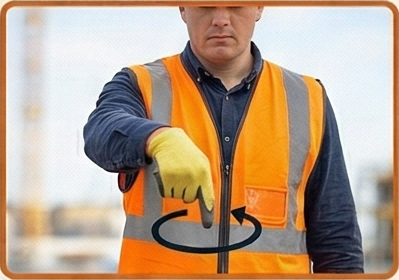
1. Hoist
Right arm raised, palm forward, rotate hand clockwise.
2. Lower
Right arm extended, palm down, rotate hand anti-clockwise.
3. Slowly / Inch
Place one hand over the signal hand. Used as a modifier with any motion signal.
4. Stop
Right arm extended, palm forward, move arm left and right.
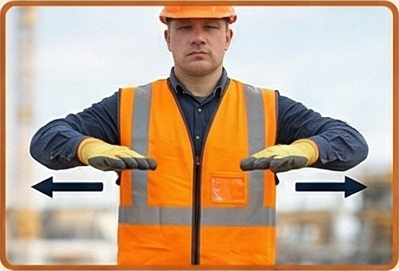
5. Emergency Stop
Both arms extended, palms down, wave rapidly left and right.
6. Raise Boom
Right arm extended, thumb up, flex fingers to signal jib/boom raise.
7. Lower Boom
Right arm extended, thumb down, flex fingers to signal jib/boom lower.
8. Boom Down & Hold
Arm extended with fist clenched. Lower the boom and hold position.
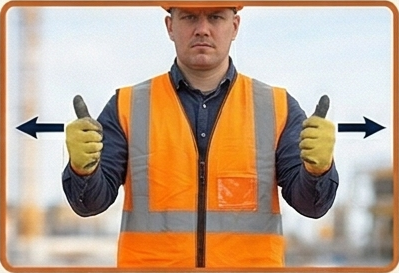
9. Extend Boom
Both fists together at chest, thumbs pointing outward.
10. Retract Boom
Both fists together at chest, thumbs pointing inward.
11. Slew
Arm extended horizontally, pointing in the direction of required slew.
12. Travel
Arms bent, beckon towards or push away from body to indicate travel direction.
13. Dog Everything
Clasp hands together in front of the body. Means secure the load — no further movement.
14. Use Main Hoist
Tap fist on top of head, then give standard hoist signal.
15. Use Whipline
Tap elbow with one hand, then give standard hoist signal.